


The first person I saw when I came home for Thanksgiving was an elder on the church steps. She told me my dress was not appropriate. She did not say “Good morning, it’s good to see you.” Not the welcome home you’d look forward to after being away to university for the first time.
It was not about the words said in that moment but a sentiment that was quietly pushing me away for years that finally came to its head.
I walked away from the church at eighteen. When I left for university, I stopped attending completely, and in the years since (I am now 31) I have been inside a church a handful of times. For years I lost my connection to my faith, and I wandered.
Why are we here?
What is actually going on?
Where do I come from
Where do I belong?
I have written before about wandering away from Christ. This piece is about the other half of the story. My husband and I recently found a church where we feel at home, and I know I am not the only person walking back through those doors. If you are wrestling with your own faith, I am writing this for you.
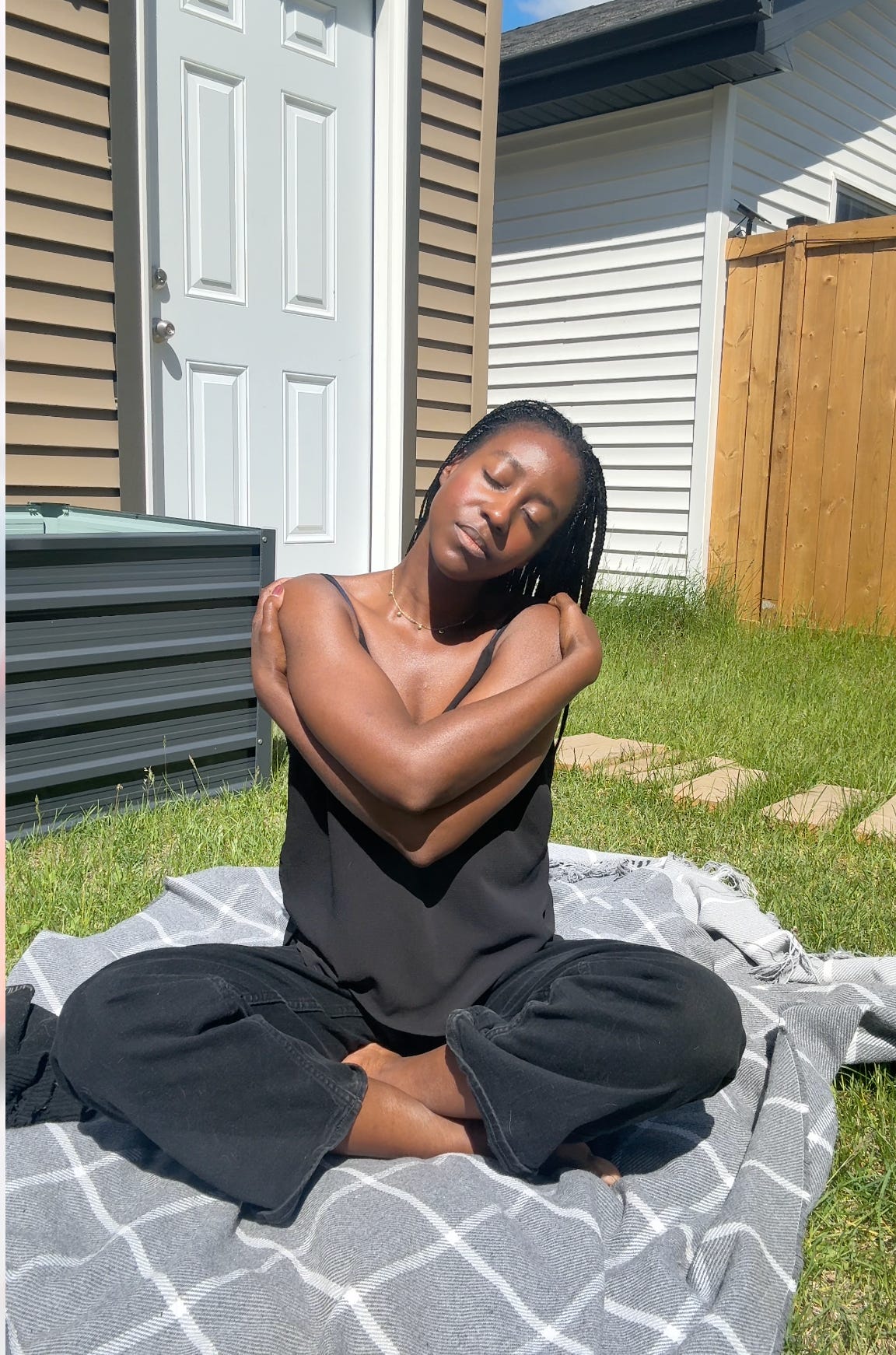
Raised In It
I grew up a devout Christian in the Seventh-Day Adventist church, and I did everything I was supposed to do.
If you do not know much about Adventists, here is the short version. It is a Protestant denomination that keeps the Sabbath from sunset on Friday to sunset on Saturday, so church is on Saturday (which was a great excuse to avoid being asked to work on Saturdays at my corporate job). It also holds Ellen G. White, a Victorian-era writer focused on the end times, as a prophet. In my experience, our church leaned on her less than outsiders would assume.
You can often spot an Adventist by looking. Most dress very modestly, and many wear no piercings, no tattoos, and no jewelry at all. I am thirty-one and no longer Adventist, and I still have no piercings or tattoos (you can take the girl out of SDA and all that jazz, I guess).
I participated heavily in church; in its music ministries, various Adventist Youth programs, and most notably in our Pathfinder’s club (a Christ-centred, co-ed version of Girl Guides, with uniforms, badges synchronized marching and everything that comes with them). Needless to say, I was always at church — sometimes 5 days a week. The concept of Service for 1 hour is so foreign to me, church begun at 9 AM and you wouldn’t leave church until 9 PM sometimes even later. I was baptized at nine and became a Deconess. I sang in church. I preached on Children's Church day. The elders in the church always praised how devout I was in my faith, and honestly I relished in the praise, attention and validation that came with it.
A lot of my childhood was spent serving. I volunteered at homeless shelters and soup kitchens. We were closely involved with the deaf and blind societies, and I even learned (some) ASL because we had a sign language choir that performed and held sabbath service for the hearing impaired. We planted trees, held fundraisers, concerts, and ran Vacation Bible School. We’d also have a large camping trip every few years with sister churches from around the world. I still have a box filled with pins I collected from fellow Pathfinders I’d met there from other countries.
So yeah, it was lovely, and it was incredibly fun. Being there was one of the best parts of my childhood. It meant being part of a community, and that is what I loved most about it. It is also why leaving cost me so much.
Going Through the Motions
Don’t get me wrong. There were lovely people in church, many of which were incredibly instrumental in the cultivation of my young mind. There were also some of the most cruel and judgemental people I have ever encountered, which I suppose is a given (have you seen the social commentary/condemnation focused “Christian” videos on Social Media lately?). Many Christians can be self-righteous and judgemental, because well… we are all human. As an adult, I understand that.
As a young person, the experience was… somewhat different. I was blossoming into my teenage years, into what I called curiosity and what the elders called rebellion, and the judgement was a part of the faith I wanted no part in. There were just as many cliques and as much favouritism as you would find in Mean Girls, such is human nature.
Now, the church is supposed to be a hospital for the broken. Naturally, I invited my friends from my public (secular) school to come visit, and the people I brought were judged because they did not look the right way. The love, the joy; the comradeship I expected were not always there. Too much of it started to feel like keeping up appearances was all that really mattered.
The Stairs
The last time I attended church regularly was while I was still deciding whether to stay in the faith, during my first year of university. I had been away from home and from my church for three months. I had gained the freshman fifteen, and most of the clothes I used to wear to church were fitted. I came home for Thanksgiving with the only dress that fit me; a black chiffon dress from Forever21 that sat below the knee, high neckline, with a sweater over it to cover my arms.
I was already self-conscious about how I looked but I told myself it did not matter, because I was going home. After three months away, that was the best part.
The first person I saw was an elder on the church steps, 3x my senior. She scolded me for what I was wearing. She told me it was not appropriate and that I should not have shown up to church dressed like that. She did not say “welcome home.” She did not say it was good to see me, or ask how school was going. The first thing she did was pick me apart.
I did not know what to feel. I was embarrassed—mortified. I walked right past her without saying good morning (because I felt like if I did open my mouth… what would have come out wouldn’t be sanctified). I went to morning sabbath school as usual, but by the time main church service started, the whole church had heard that I had been disrespectful to an elder on the stairs. That is how it went there. People gossiped.
That moment was the last straw.
When Heaven Went Quiet
The church was only part of it.
When life got hard, I prayed. I did all the things I was told to do. And time and time again I was met with a God who was silent to my prayers, my cries, my screams, everything.
My parents were divorced by the time I was six months old, and my father was not involved in my life. He almost never called or checked in. It was always me reaching out, and the moment I stopped calling, there was no relationship. I grew up with an abusive stepfather, and I felt as though my home was not a safe place. And I never told anyone about it. I had a decent relationship with my mother, and at times it was, but inside I felt unseen, like I couldn’t be myself with her either. By my early teens, I only knew men to be one of two things: abusive, or absent. I prayed for God to help make my home a safe place, and my cries fell on deaf ears.
In my last year of university, my biological father was diagnosed with cancer. We had been estranged. But he was still my father and that still meant something to me. I prayed and bargained with the Lord, the way one does. If He would just save my father, I told Him, I would turn back to Him. Again my cries, my petitions, my pleadings, my wrestling with God went unheard. My father passed away just one month before I graduated from university.
That was when I left completely, in my heart anyway if not in appearance (because I was still of course a people pleaser). At the time, it felt like another blow from another father I could not rely on. I was heartbroken by my earthly fathers, and abandoned by my heavenly Father too, at my lowest. To ease the pain, my only option was to turn my back on Him as well, and to search for whatever else was out there.
As an adult, I understand something I could not then. People make their own decisions. I was never powerful enough to change how the people around me acted, or to save anyone from the consequences of their choices, and neither were my prayers. That was not a failure of mine. But a young woman in the thick of it, does not see that. She just feels abandoned.
I never stopped believing God existed. I stopped believing He was listening. And I stopped wanting to be around the people who spoke for Him. When I talked to others who had left, the stories echoed mine. They had been ostracized by a church that did not behave the way Christians are supposed to behave. I found more Christlike love and comradeship outside the church than I’d found inside it, so I went looking.
Searching for Where I Belonged
I was around nineteen the first time I called myself spiritual instead of Christian. The elders clutched their proverbial pearls. I said it because I did not want to be associated with a denomination, or with the connotations I felt personally condemed by. I was tired of allowing labels in general to define my identity—broken family, fatherless daughter, child of immigrants, angry black woman, sheltered.
Calling myself Spiritual made me more of an outcast. Church members called my mom. Whenever I spoke to them, I was talked down to, and scolded for what I needed to do and what I should not have done. Not one person was open to hearing what I had to say or ask about my experiences or what drove me; a former devout Christian since birth, to make such a distinction. For a young person, that turns you off even more. I didn’t want to hear anything about God or Jesus or anything else.
I was not the only one. Many of the older young adults around me left too. Young people were leaving the church in droves—I wonder why.
Leaving was incredibly lonely. I realized just how sheltered I’d been raised that a lot of the outside, secular world did not gel with me. Almost the whole community I had built was inside the church, and when I left it, I was very much alone. I already felt alone so in some ways I was used to it.
But the search itself was about something deeper than the church. I am a descendant of the enslaved, and I am Canadian. I never felt like I fit into either world.
My parents were born in the St Vincent. I’d never lived there, so I did not speak like them or act like them, so around my family I felt like an outsider. As though somehow I didn’t quite belong there. At home in Canada, I felt ostracized because I was not like the kids around me either. I had curry goat, sautéed okra and dumplings for lunch while everyone else had Doritos, Dunkaroos and sandwiches (not much of comparison to me now, my traditional Caribbean lunch was clearly nutritiously superior but as a child who wanted to fit in, it made me stick out like a sore thumb). I could not afford what they had. I grew up not knowing where I belonged.
So my research into African and Indigenous spiritual practices was a longing to belong somewhere, to have some connection to my culture and ancestry— to family, the way many others around me did. I devoured many books on the subject, like Sacred Woman by Queen Afua, and Of Water and Spirit by Malidoma Patrice Some among others. I read about the beliefs, traditions, folktales, culture, and faith of the people I descended from, and I found it fascinating. I read about Hoodoo, Root Work and Folk Medicine. Through all of it, surprisingly, I still pointed my spirituality toward God.
There was always something inside that discerned how far I would go and what I would not touch. I believe it was the Holy Spirit, still dwelling within me, keeping me safe and guiding me on where I could search and practice, and what was not for me.
Let’s just say I wandered pretty far. But there was always a thread pulling me back, a voice that said do not go through this door, you can go this far and no further, or this is very unlike God. My roots in Christianity protected me through all of it.
Coming Back
My husband had a very similar experience with the institution of religion. I am eternally grateful that I met him. Through our own endeavours, and through reading the Bible together, we found the zest for our faith again, and we are proud to call ourselves Christians.
Reading the Bible for myself is what changed everything. Growing up, I recall the majority of teachings I received were about how to dress, what to do, and what to think; the rules and expectations of the title of a Follower of Christ (especially as it pertained to my interactions or inherent temptation to men by my mere existence). I spent my whole life in church and never really understood the Bible. I went to Bible study, but didn’t sit with the New Testament and the life of Jesus and what He came to say or do. To be fair, I was a little pre-occupied surviving my home-life. The focus often leaned toward the Old Testament and its traditions (important, but not the centre of Christ-ian faith, IMO).
When Jesus was asked which commandment mattered most, He said to love the Lord your God with all your heart, and to love your neighbour as yourself, and that everything else hangs on those two (Matthew 22:36-40). He said, He came to fulfil the law, not abolish it (Matthew 5:17), and He established of a new covenant with His people. For my husband and me, it comes down to faith, our relationship with Christ, and how we treat people because of that relationship. It is not about the rules and rituals we are often fixated on (not unlike the very Pharisees written about in the Gospels).
Watching The Chosen, a crowd-funded live-action adaptation of the life of Jesus Christ, is what pushed us to read The Gospels and to pursue our own relationship with Christ. We started reading His word and what was written about Him, firsthand, straight from the source rather than secondhand. The House of David, also from Angel Studios, did the same for us for the Old Testament. If you have not watched either adaptation, I encourage you to because they are both phenomenal (the new season of The Chosen is about to begin and we are beyond excited). It put so much into context that when I read the Bible now, I can picture what I am reading.
Healing the Eve Wound
As a young woman, the Bible was… very hard for me to read. So much of it seems to leave women out, and mankind’s long history of making women lesser colours how it gets read and taught. I do not believe that was ever the intention of the Bible. Reading it for myself, and learning about the time it was written in, helped me heal a lot of what is known as the “Eve wound.”
Now I read it like a collection of firsthand accounts, close to a diary — much like you’re reading right now. Someone writing down what they saw and how they felt. The ups and downs, the highs and lows, the ways they cried out to God when they felt they had lost everything.
- The Disciples (ordinary men and women) seeing a humble carpenter, Jesus Christ cure people of their incurable diseases and raise the dead — um.. what?
-David’s songs of despair and triumph — and requesting that God do some unholy things to his enemies (peak).
-Solomon’s songs deemed the most erotic book of the Bible — yes erotic, because pleasure is biblical and holy.
-Queen Esther’s test of faith and courage that saved the lives her entire nation.
and so many other passages.
I did not know how to read it that way growing up. And it tells me something about my own years of crying out into silence. I was not the first person to do that, and the Bible does not hide it.
I Am Part of a Return
I did not expect to be writing this. Part of my aversion to going back to church was what I had experienced with the people in it. What helped me was remembering that many people feel the way I felt. Lost. Hopeless. Lonely. Longing for belonging, for relationship, for community.
I sit somewhere on the line between Millennial and Gen Z (a zillennial if you would) and I know I am not the only one finding my way back. I see it in the pews. They are filled with young people who look a lot like me, many of them walking back through the same doors they once walked out of.
We kept the Word and let go of the strict rules and the dogma. We separated our lived experiences from the Scripture itself. And we have watched a lot of destruction, violence, and upheaval, and we have seen the gaps and the lies in the systems and institutions we were told to trust. It makes sense to me that so many of us are turning back to the Word and building a real genuine connection with Christ. I love seeing it, and I love being part of it.
A Church of Our Own
Recently my husband and I started looking for a home church, and praise the Lord, we found one we really enjoy being at.
We are committing to going every week, and it is a new, yet pleasantly familiar experience. I had always dreamed of gifting my children a similar Christ-centered community involved childhood the way I had growing up and it finally feels like I’m planting the seeds for that life to take root.
For now, it is a feeling I can hardly describe, finding a place full of like-minded people who are Christ minded, who read the Bible. I have never seen a pastor dissect the Bible from the pulpit the way mine does. His teaching actually inspires me to go home and sit with the Word myself. After all those years of not knowing where I belonged, it feels like my husband and I have finally found a place that is ours.
What Changed in My Days
The biggest change in my daily rhythm is that I am de-centring myself (I know, coming from someone who is all about self care… hear me out).
A lot of wellness advice stays focused on the self. What I found is that I was happiest when I focused on others. The longer I looked in the mirror, the more I saw things I wished were different and needed to change, and that bred more insecurity. But when I focused only on the outside world, the way I did when I was younger, I lost myself in the middle of it. I became a people pleaser. This season is about balancing both; centring Christ. When you centre Christ there’s no one to please but God, so there’s no room to self-abandon. You also give because it’s not your water in your cup, it’s His, and it overflows so there’s always more to go around.
So my morning rhythm and my evening prayers are not only for me. I meditate often for my own wellbeing, but I pray for others, and honestly I often pray for others more than I pray for myself. I do not just journal anymore, either. Journaling on its own can turn into a dark, scattered place if you are not careful. Now I seek guidance in the Word, I journal my thoughts of course but also about what I have read and how it applies to what I am going through, or look for passages that speak to it. It is the best self-help, personal growth, life counsellor, relationship guide and business mentor I know (it is in fact a best-seller) and every time I read there is more to discover.
It has also become central to my marriage. My husband and I pray together, read together, dissect the Bible together (tabs, highlighters, margin notes and all), go to church together, and worship together, and it has brought us closer than ever. When we first got together, I had my own spiritual practices and he had his. When you keep it separate like that, you can grow apart, because you are not growing together. Now we grow together physically, with exercise, food, and nutrition, in love and relationship, and spiritually with the Word.
For the One Still Wrestling
If you have been wrestling with your faith, and questioning what is out there, I have been where you are. I hope my story has inspired you to begin reading again. Begin searching again, on your own terms, through the Word itself and not through someone else’s filter. On the other side of it, I found beauty, joy, and gratitude waiting for me when I accepted Christ as my Lord and Saviour. I am so filled with the Holy Spirit that I cannot help but talk about Jesus, and I hope you find that too.
This is the story of a woman who wandered away from her faith and came back. Look, life is not all rainbows and sunshine. Everything going on in the world is still going on. The Bible tells me to trust and surrender, and that is the season I am living in. It gives me hope. And if hope is all you have, well… you have a lot.
✨ Why join as a paid subscriber? ✨
Inner Alchemy exists to help you stop drifting through the decisions that shape your life, cycle, marriage, motherhood, all of it, and start making them with your eyes actually open. That means giving you the real story, not the comfortable version.
If this story found you where you are, there is more of it, written for paid subscribers every week, including:
Inner Alchemy is $10 CAD a month or $96 CAD a year, for the full archive.